
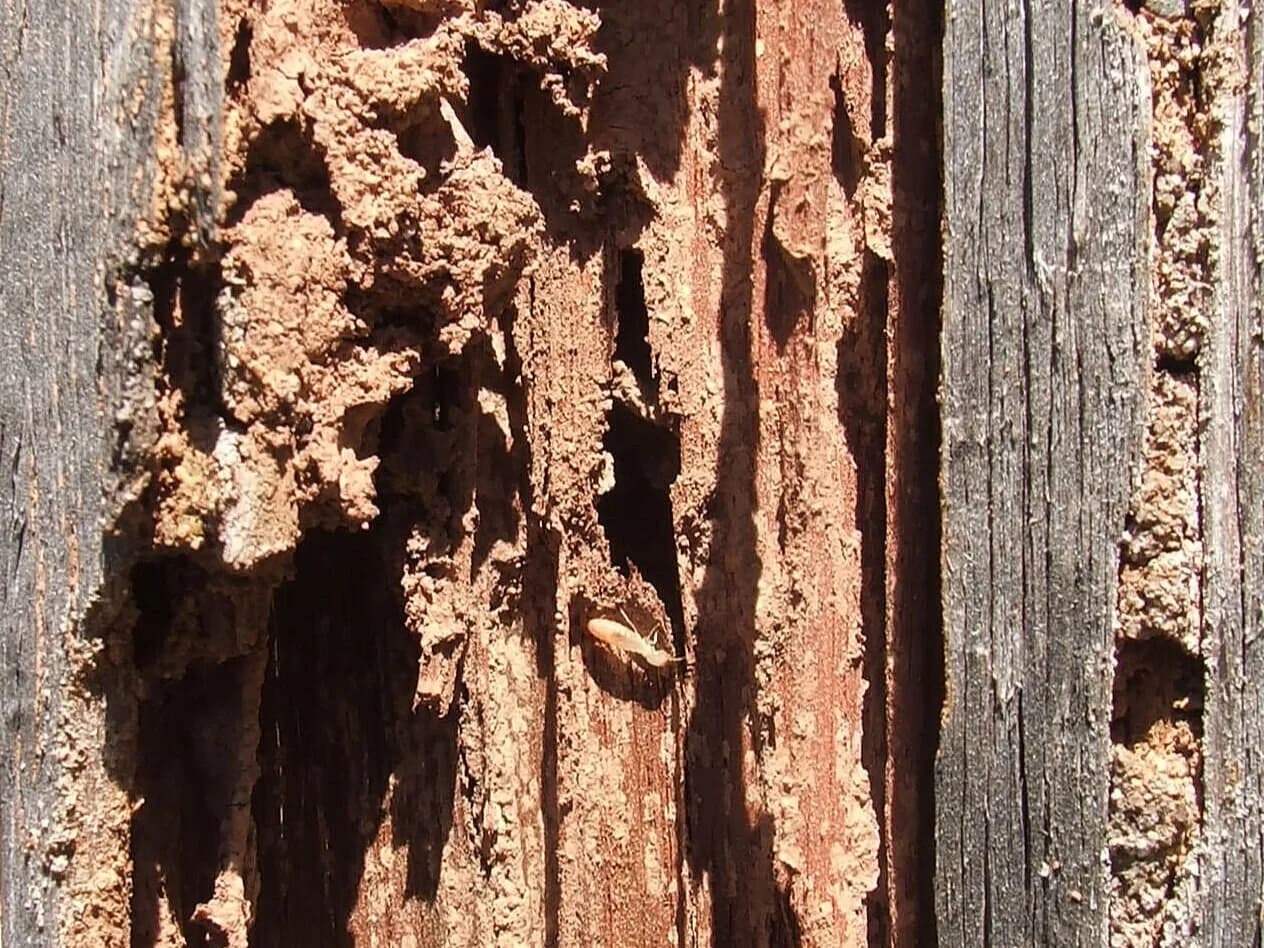
Protect your home’s structure
Termite Services
Termite inspections, treatments, and fumigation for drywood and subterranean termites in Southern California — before damage becomes a costly repair.
How we help
Termites work quietly and can weaken the wood that holds your home together. Across Southern California, we inspect carefully, explain what we find in plain language, and recommend the right treatment for your property — not a one-size-fits-all pitch.
Inspection & foundation graph
We document visible activity and damage, then show where treatment should be applied based on your construction and foundation.
Local treatment
Targeted treatments when evidence is accessible and elimination is realistic without whole-structure fumigation.
Soil treatment
Chemical barriers that help keep subterranean termites from entering through the foundation and plumbing penetrations.
Fumigation
Whole-structure fumigation when drywood termites are in hard-to-reach areas — so treatment reaches where spot treatments can’t.
Structural repair guidance
Damage often shows up on fascia, eaves, decks, and bathroom subflooring. We help you catch it before repairs grow.
Free inspection
Not sure what you’re dealing with? We’ll inspect, explain the findings, and recommend a plan that fits the property.
Start your requestMention this website for 10% off your initial treatment when you mention this website.
Our work
What termite work actually looks like
Photos from our own jobs — the signs we look for during an inspection, and the treatments that follow.
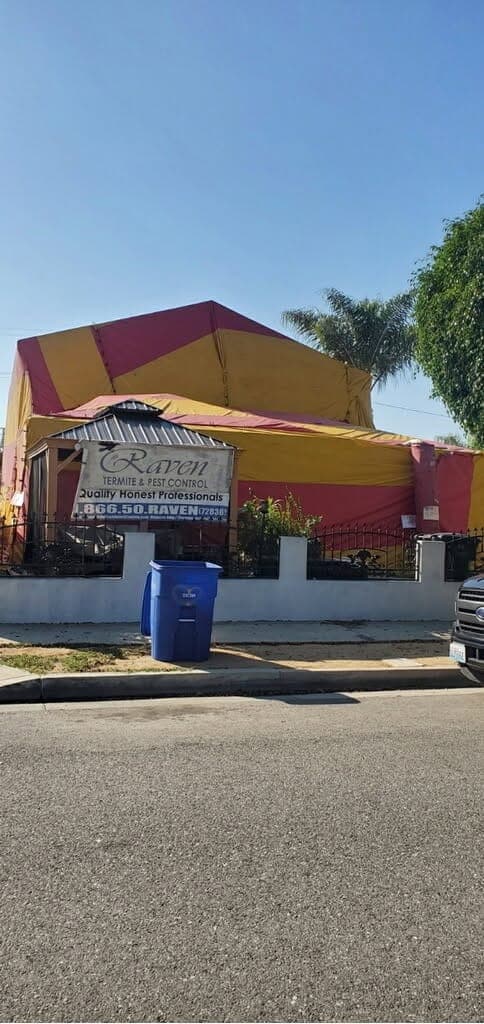
Whole-structure fumigation on a single-family home. The tent stays sealed until the structure is cleared for re-entry. 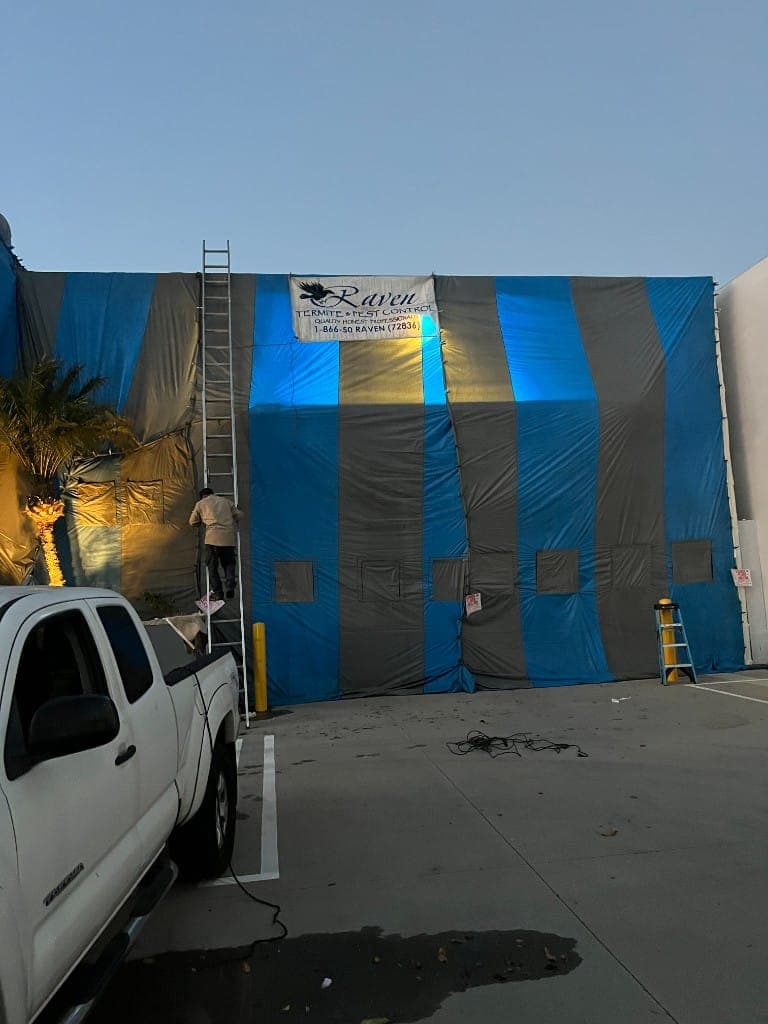
Commercial buildings are usually tented after hours so the business loses as little time as possible. 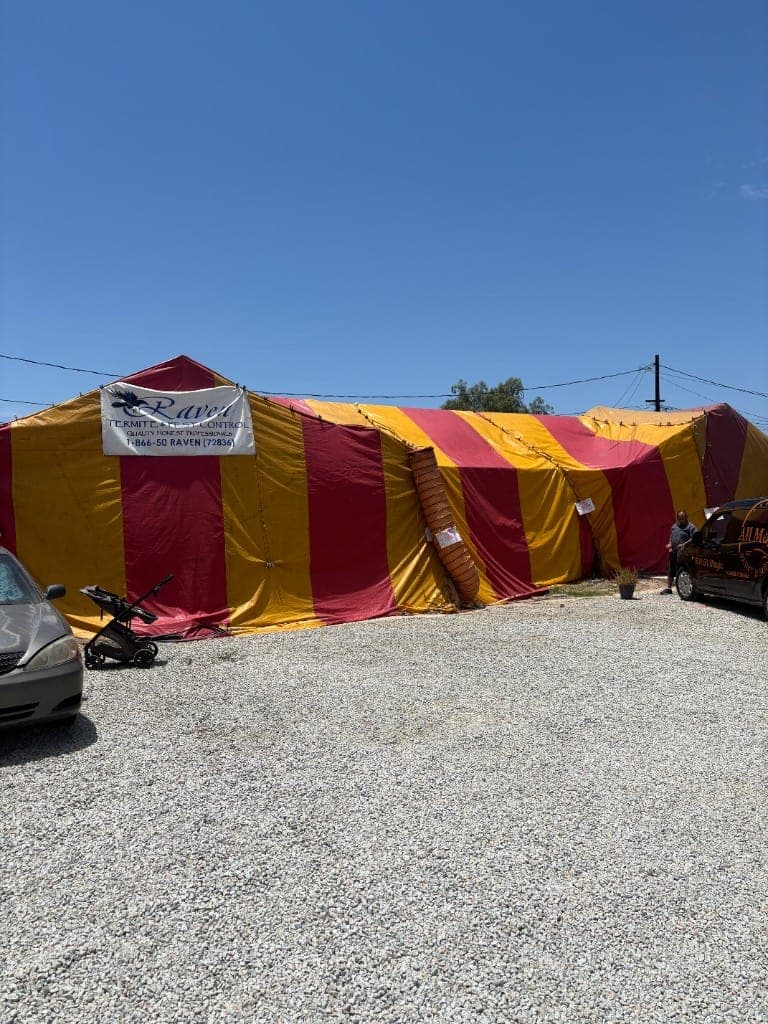
Manufactured homes get tented too. The prep list differs from a standard house, and we walk you through it. 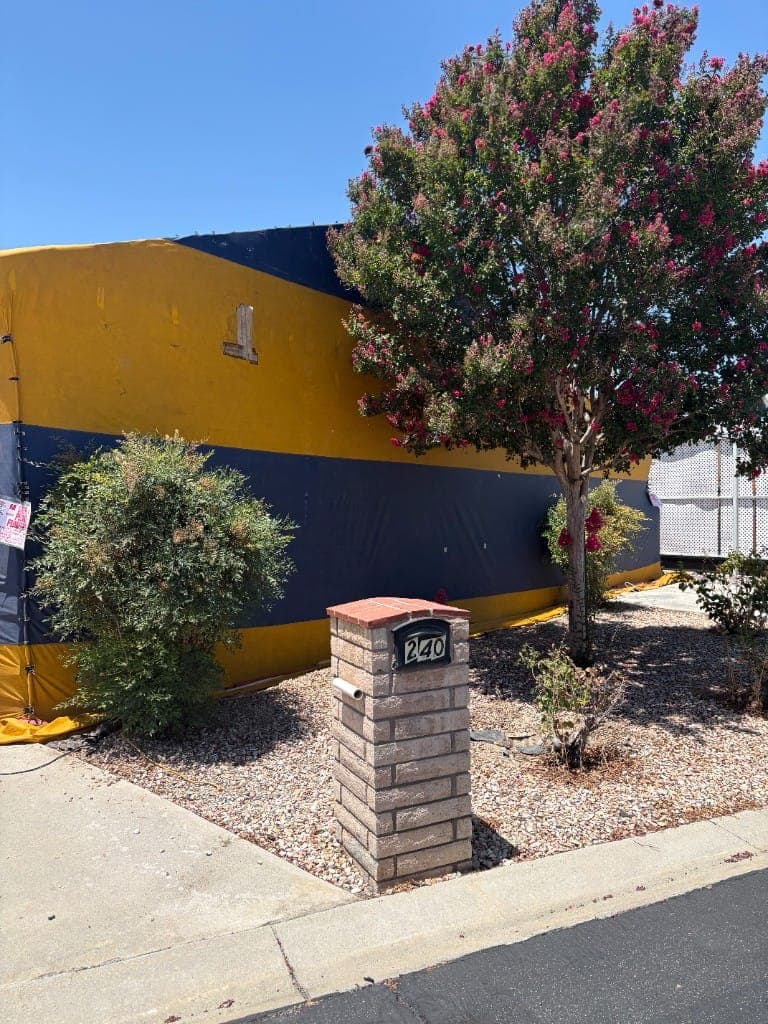
Tarps are sealed at ground level so the fumigant stays inside the structure. 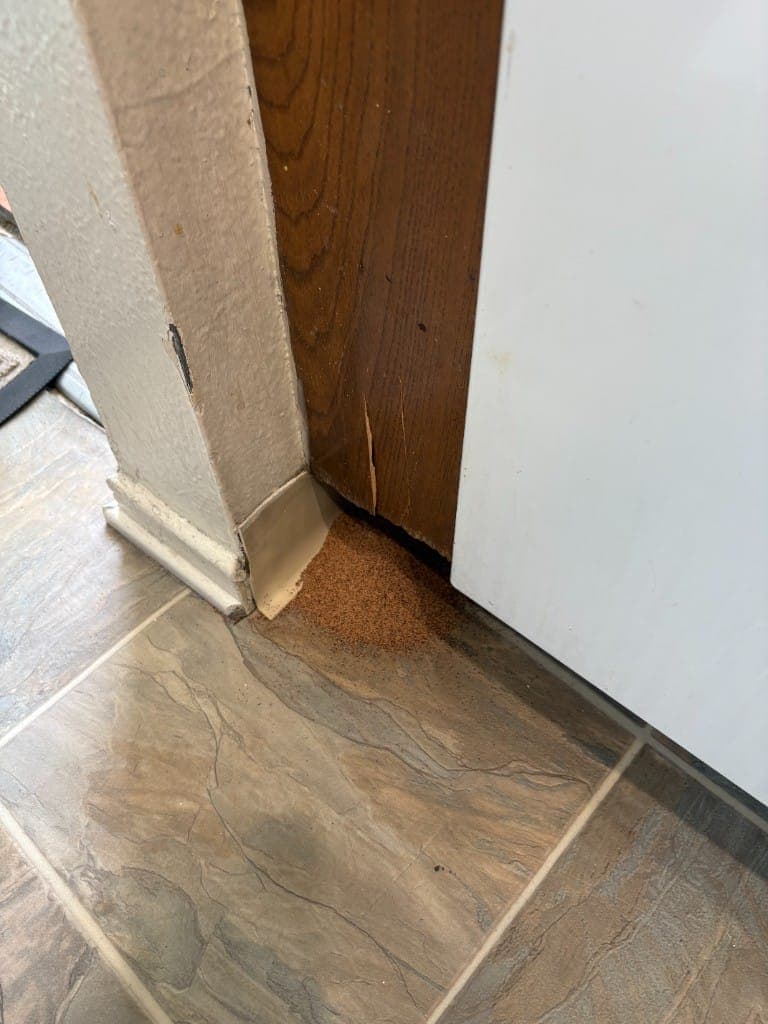
Drywood termite droppings, called frass. Small piles that reappear after you sweep are often the first sign. 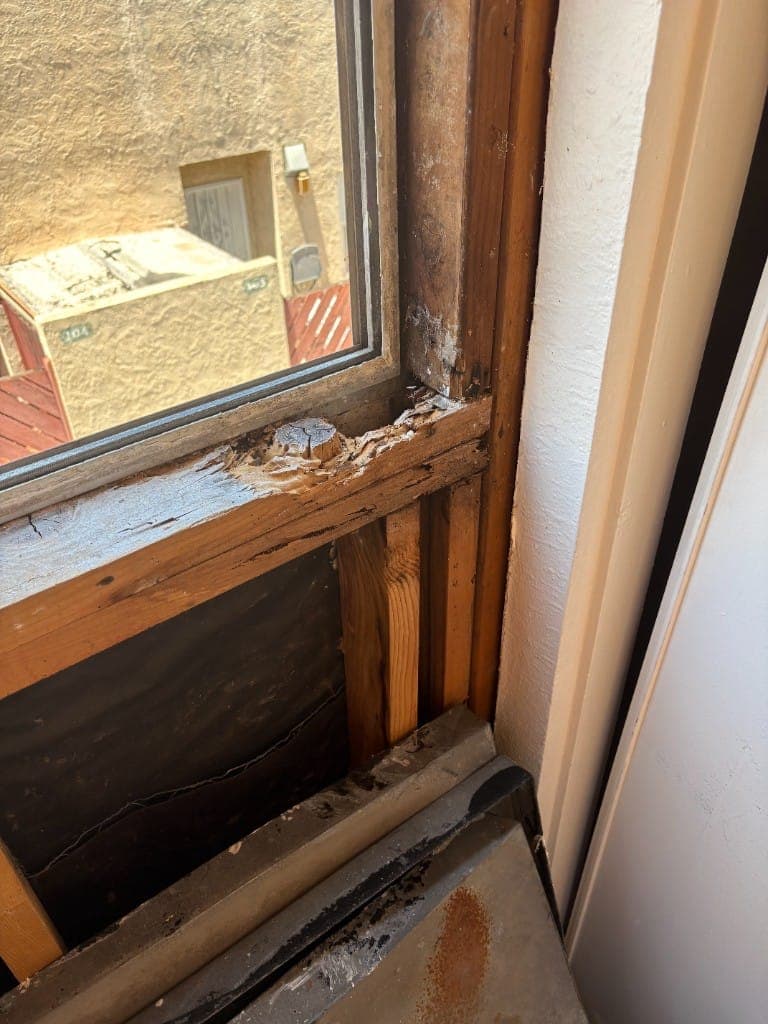
Damage found at a window sill. Sills and frames show up often because the wood there stays damp. 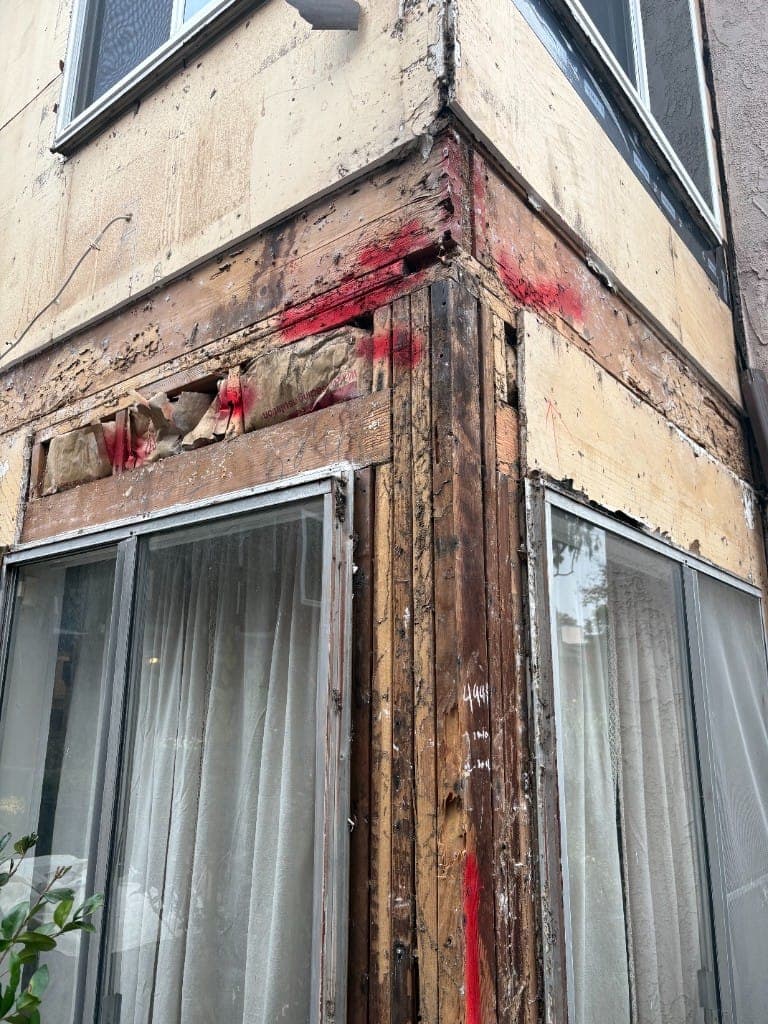
Damage marked in red during inspection, so the repair replaces what actually needs replacing. 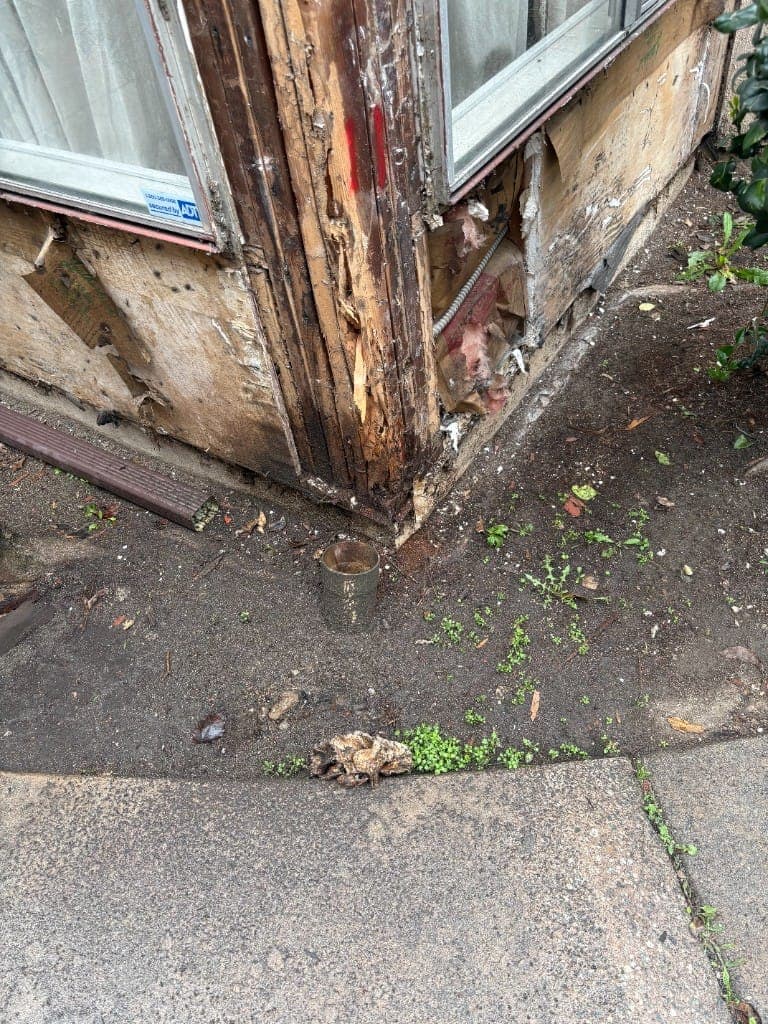
A corner post eaten out at ground level — the kind of repair that grows the longer it waits. 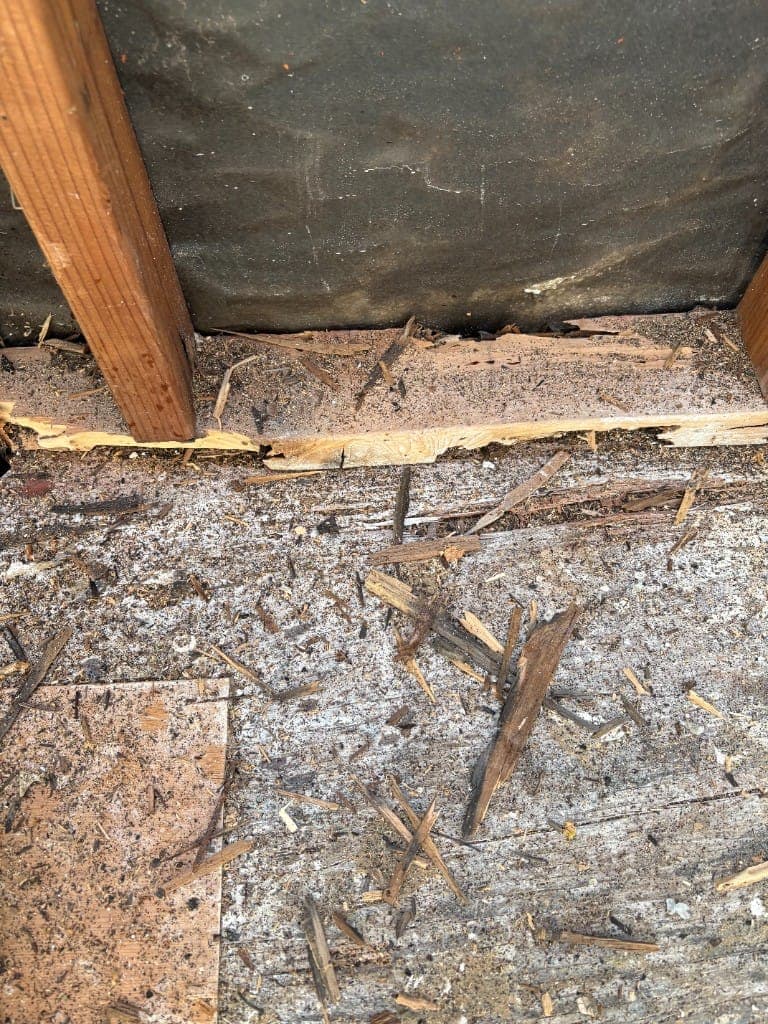
Wood cleared from a damaged wall. Sound framing does not come apart like this. 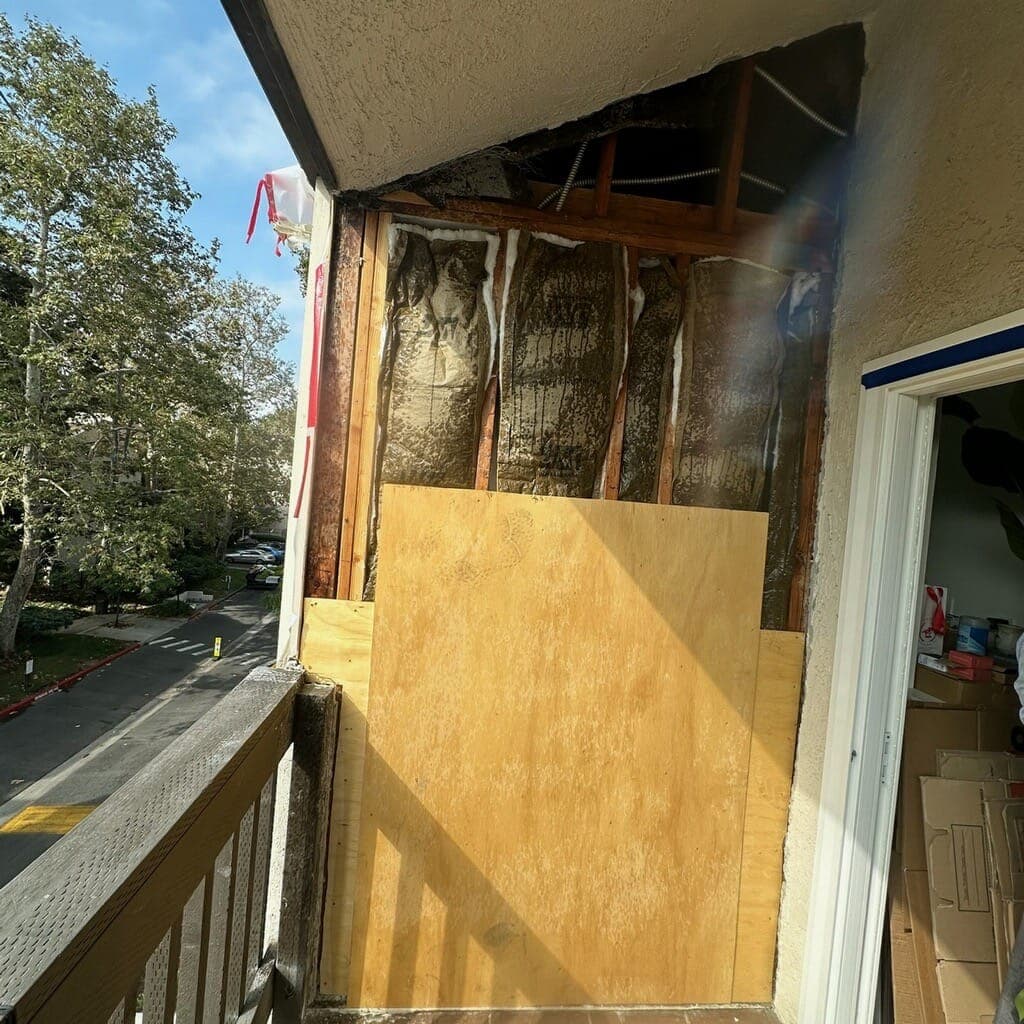
Wall opened up so damaged structural members can be replaced rather than patched over.
Learn more
Deeper detail when you want it — without burying the next step.
Other services
Dealing with more than one problem? We handle these too.
General Pests
From ants and roaches to wasps, fleas, and bed bugs — proactive pest control in Southern California for the pests that show up with each season.
Learn moreBird & Rodent
Humane, practical bird and rodent control in Southern California for rats, birds, squirrels, and other wildlife that damage property or create health risks.
Learn more